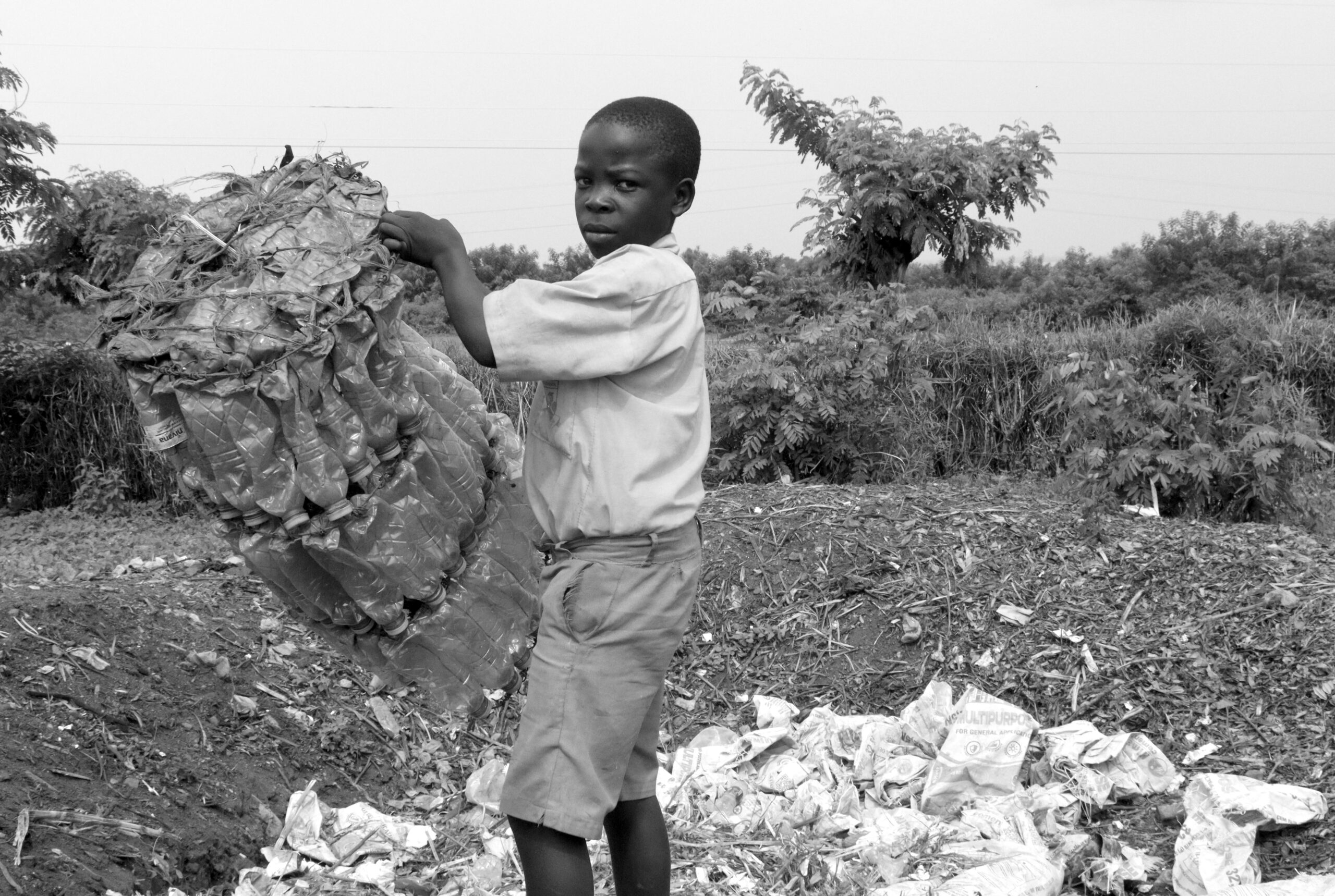
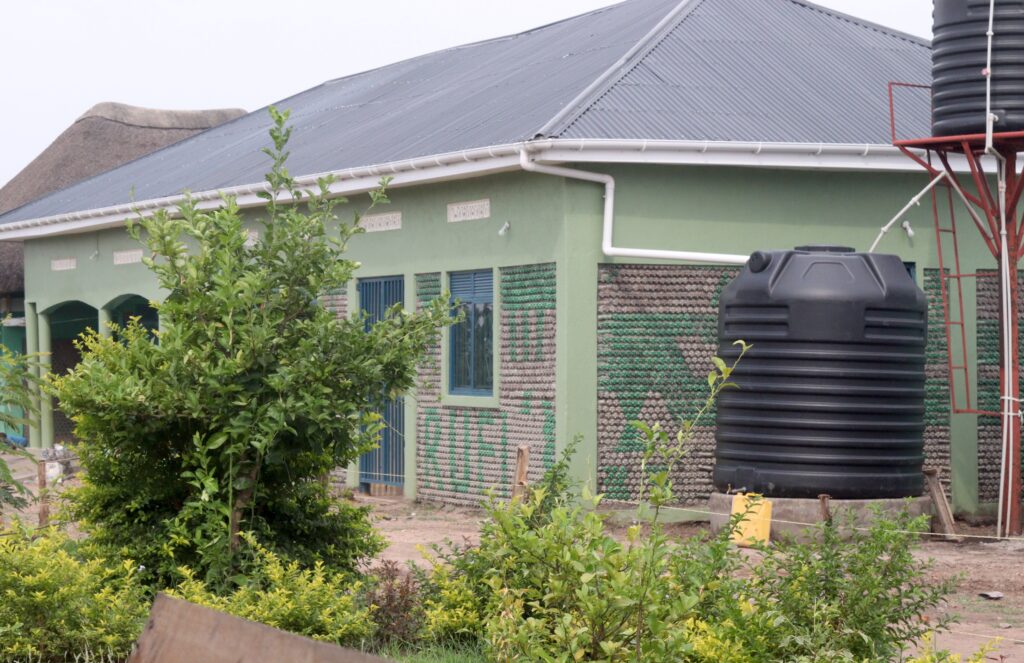
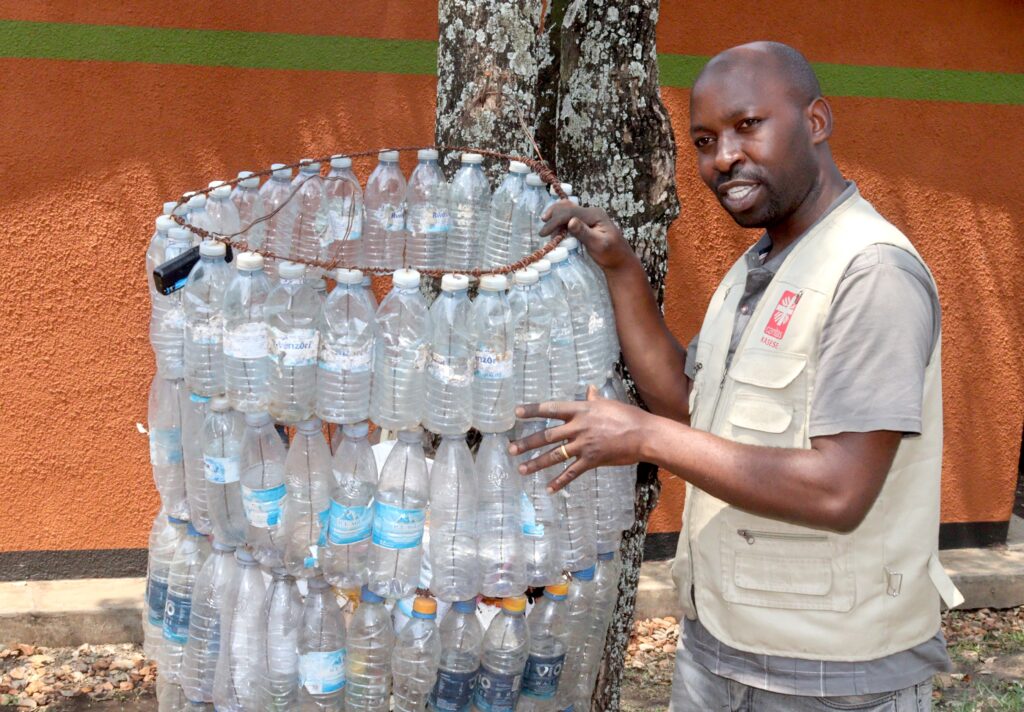
At the Rural Focus Initiative for Applied Technology (RuFI) in Kirembe Cell, students and trainers are turning plastic bottles into eco-bricks used to build walls, seats and small structures. Their hands-on approach shows how innovation can grow directly from local environmental pressures.
“People have been complaining about Uganda being a highly polluted country,” says RuFI director Jovia Biira. “So we came up with the idea of constructing bottled houses. We’ve been moving around the town collecting the waste.”
What began as a school project has spread into surrounding communities. RuFI now trains households in the technique, and some have built simple toilet structures using plastic bottle bricks.
“Out of plastic, as you see, we have constructed houses. We have seats, and when the community tours around, they pick this innovation. We train them, and many have put up structures such as toilets,” Biira says.
RuFI estimates that more than 30,000 bottles have been reused in its projects.
At Muhokya Primary School, a 200-member environment club turns plastic waste into ropes, door mats and tree shades. Deputy Head Teacher Kabugho Yodesi says the initiative strengthens both learning and environmental awareness.
“Some of these items like door mats are taken by pupils to their own homes, and the ideas are trickling into communities,” she explains.
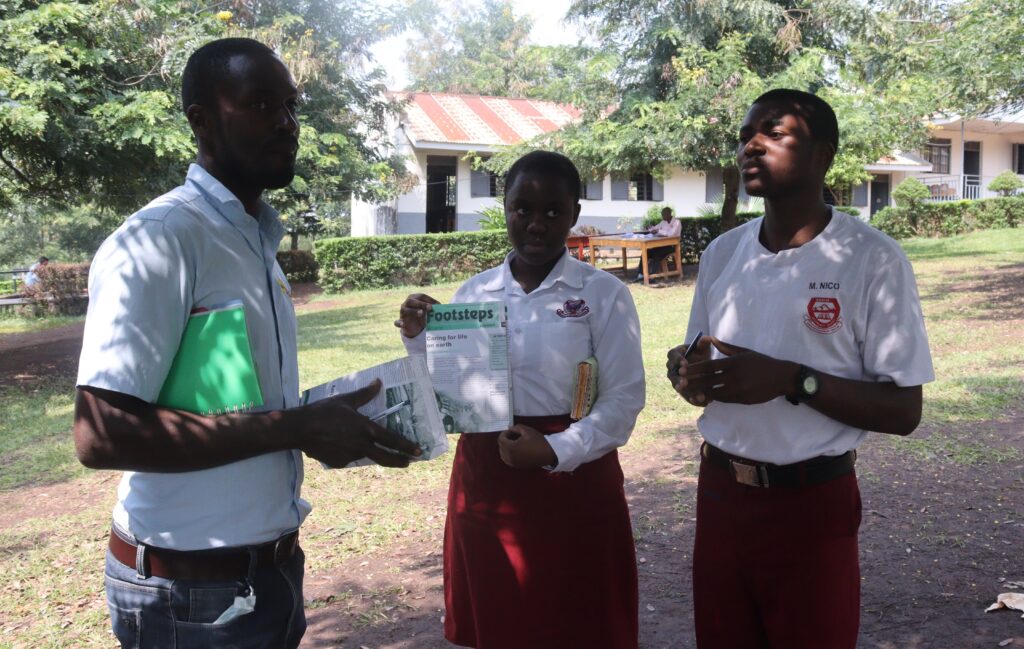
Kasese Secondary School is applying a similar approach through its nature club, which repurposes plastic bottles into litter bins and old paper into bags.
“Kasese Secondary School is actually one of the schools that has explored different ways to conserve the environment,” says Senior Five student Martin Kiiza. “We have focused on plastics, and we came up with a project of making plastic dustbins to keep our environment pollution-free.”
Club members Nakawoya Natasha and Gloria Ngabire believe these efforts go beyond the classroom. “At the gate, you are not supposed to enter the school with anything made of plastics,” Ngabire says. “We are saving you from carbonated drinks — and saving the environment from pollution. As young people, we have to set the right path.”
A Primary Seven pupil at Muhokya says the school has collected about 10 tonnes of plastic waste since 2023, mostly bottles from water, soft drinks and herbal medicines. Pupils are now teaching these techniques to family members.
“Some of these projects have come up because of the new curriculum. Students do routine projects that use very little budgets,” the pupil adds.
The wider Rwenzori region has seen rapid population growth and increasing use of packaged goods, producing more plastic waste than local disposal systems can handle. With limited collection infrastructure, much of the waste ends up in open spaces, drainage channels or nearby wetlands.
Joreme Bwambale, Director of Rwenzori Royal Institute, says the challenges extend beyond litter. “The first issue we found is that there’s no place to recycle,” he notes. “But the other issue is people’s behaviour — they see no problem with dumping waste wherever they are.”
Patrick Nyamunungu, a sociologist working with China Railway 18 Group, says waste disposal systems in the municipality have also contributed to the problem. “People are using the drainage channel as a waste dumping site because they closed down the many manholes they were previously using to dump their garbage,” he says. “It blocks the water and could eventually weaken the newly constructed road infrastructure.”
Although the district lacks precise records of how much plastic enters the environment each day, events such as flooding — often worsened by clogged drainage — show how widespread the problem has become.
At Kasese Secondary School, agriculture students are using plastic waste in backyard gardening projects. “These are the life skills we’re learning through the new curriculum,” says teacher Lawrence Kalenzi. “Some of our students are selling these products and earning an income.”
Caritas Kasese Diocese is also promoting plastic reuse. Environmental officer Yosia Kibakuli warns that microplastics pose serious health risks. “Each person consumes the equivalent of a credit card’s worth every week,” Kibakuli says, citing the rise in microplastics. “They don’t decompose, so it’s important that we innovatively take them out of the environment.”
Caritas is training community members to turn plastic waste into useful household and business items such as bins.
RuFI’s Biira says the demand for plastic has grown so much that they now hire people to collect bottles and even buy supplies from Rwimi in neighbouring Bunyangabu District. “Plastic is no longer waste — if you can’t recycle it, someone else can,” she says.
District Environmental Officer Oliver Masika says school-based initiatives could scale quickly if more institutions embraced conservation. “Flooding and other disasters have hurt the education and health sectors — and they all start with our behaviour,” she says.
Local officials and community organisations across the region say plastic pollution remains a growing concern, driven by behaviour, limited recycling options and inadequate disposal systems. Those interviewed stress that lasting progress will require changes in daily habits as well as improvements in basic waste management infrastructure.
Kasese Municipality Mayor Chance Kahindo says community-led initiatives are starting to make a difference. He notes that over the last 24 months, the town has seen a visible reduction in plastic waste, crediting the efforts of schools and local residents who actively collect and repurpose plastics.
WWF–Uganda communications officer Happy Ali says children are playing a crucial role. “We have been working with schools because we know that this knowledge can easily be integrated within communities,” Ali says. “Today we are able to celebrate young people who are keen on finding solutions to conserve the planet.”
While school-led efforts alone cannot solve Kasese’s plastic problem, they show what local action can achieve — and how Uganda’s future environmental stewards are already shaping practical solutions in their classrooms and communities.